
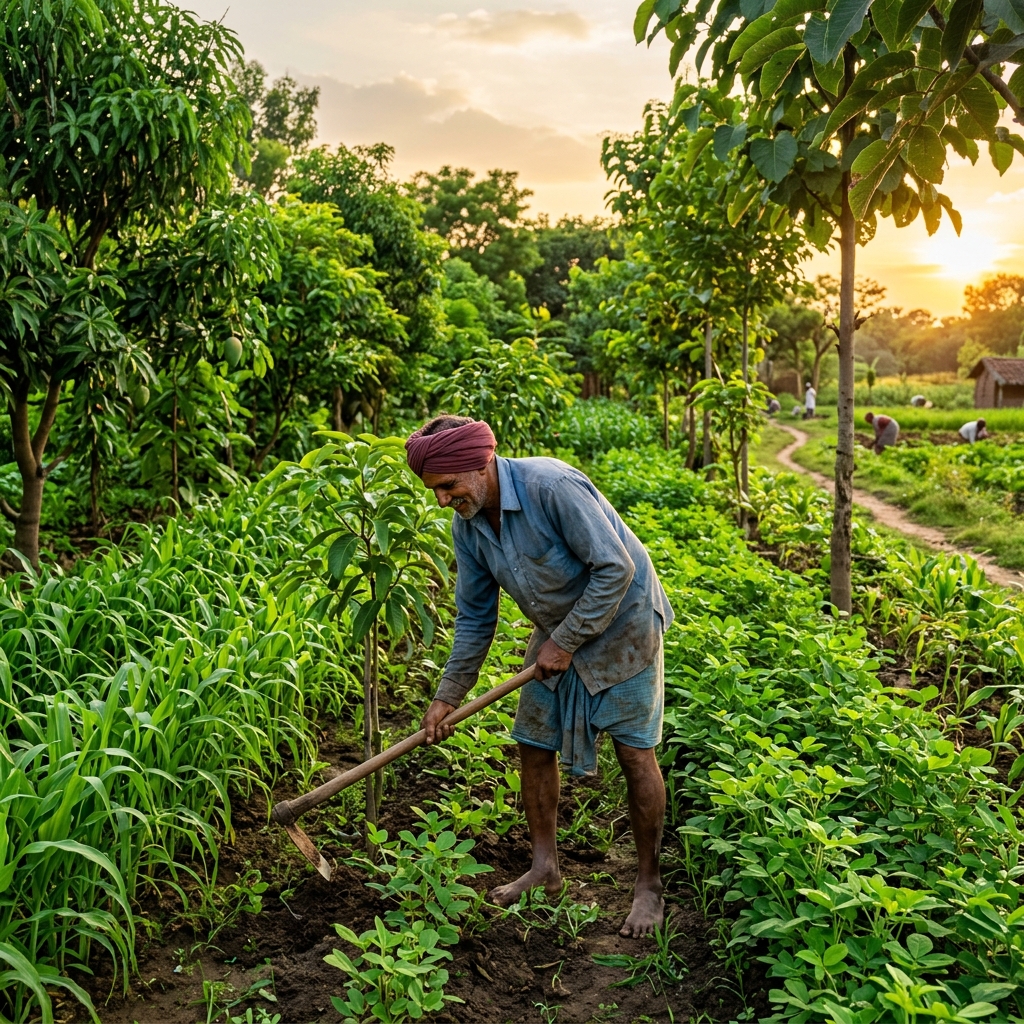
Agroforestry Tree Plantation Models
Growing Trees and Crops Together for a Sustainable and Profitable Future.
What is Agroforestry?
Agroforestry is a land-use system that integrates trees with agricultural crops, livestock, or both on the same land. Unlike traditional farming or monoculture plantations, agroforestry creates a balanced ecosystem where trees and agriculture work together to improve productivity, biodiversity, soil health, and long-term income.
At GeoTree, we promote agroforestry tree plantation models that help farmers, landowners, companies, and institutions achieve environmental sustainability while generating economic benefits.
Popular Agroforestry Models
Discover the proven systems we implement to maximize environmental and economic returns.
1. Agrisilviculture Model
Trees are grown together with agricultural crops on the same land.
Teak + Wheat, Melia Dubia + Pulses, Bamboo + Vegetables, Poplar + Wheat
- Additional revenue from timber
- Improved soil structure
- Reduced wind and water erosion
2. Silvopasture Model
Trees are integrated with livestock grazing systems.
Fodder Trees + Cattle Grazing, Bamboo + Goat Farming, Neem + Pasture Grasses
- Shade for livestock
- Improved fodder availability
- Enhanced animal welfare
3. Agri-Horticulture Model
Fruit trees are cultivated alongside agricultural crops.
Mango + Turmeric, Guava + Vegetables, Amla + Pulses, Lemon + Medicinal Crops
- Multiple income streams
- Better land productivity
- Increased farm resilience
4. Boundary Plantation Model
Trees are planted along field boundaries while maintaining crop cultivation in the main farming area.
Teak Boundary Plantation, Bamboo Fencing Plantation, Neem Boundary Rows
- Minimal crop competition
- Additional timber and biomass production
- Natural fencing and wind protection
5. Block Plantation Model
A dedicated section of land is allocated for commercial tree cultivation while the remaining area is used for agriculture.
Bamboo Plantations, Teak Plantations, Melia Dubia Plantations, Sandalwood Plantations
- Long-term investment returns
- Carbon credit opportunities
- Commercial timber production
6. Alley Cropping Model
Trees are planted in rows with agricultural crops cultivated between them.
Gliricidia + Cereals, Bamboo + Vegetables, Fruit Trees + Legumes
- Improved nutrient cycling
- Enhanced soil fertility
- Better water retention
Why Agroforestry Matters
The profound impact of integrating trees into agricultural landscapes.
Climate Change Mitigation
Agroforestry systems capture and store carbon while helping farms adapt to changing climate conditions.
Read moreSoil Restoration
Tree roots improve soil structure, increase organic matter, and reduce degradation.
Read moreWater Conservation
Trees help retain moisture, reduce runoff, and support groundwater recharge.
Read moreBiodiversity Enhancement
Agroforestry creates habitats for birds, pollinators, and beneficial insects.
Read moreSustainable Income
Farmers gain multiple sources of revenue from crops, fruits, timber, fodder, and non-timber forest products.
Read moreCarbon Offset & ESG
Agroforestry plantations are increasingly being adopted by businesses and organizations seeking nature-based solutions for sustainability initiatives.
- Carbon sequestration
- Ecosystem restoration
- Farmer livelihood enhancement
- Biodiversity conservation
- ESG and CSR impact generation
- Sustainable land management
Companies can support agroforestry projects to create measurable environmental and social impact while contributing to climate action goals.
GeoTree Agroforestry Solutions
GeoTree works with farmers, communities, corporations, and institutions to establish sustainable agroforestry projects.
Our Services Include:
Invest in Trees. Empower Farmers. Restore Ecosystems.
Whether you are a farmer looking to diversify income or an organization seeking impactful sustainability projects, GeoTree can help you implement successful agroforestry programs.