
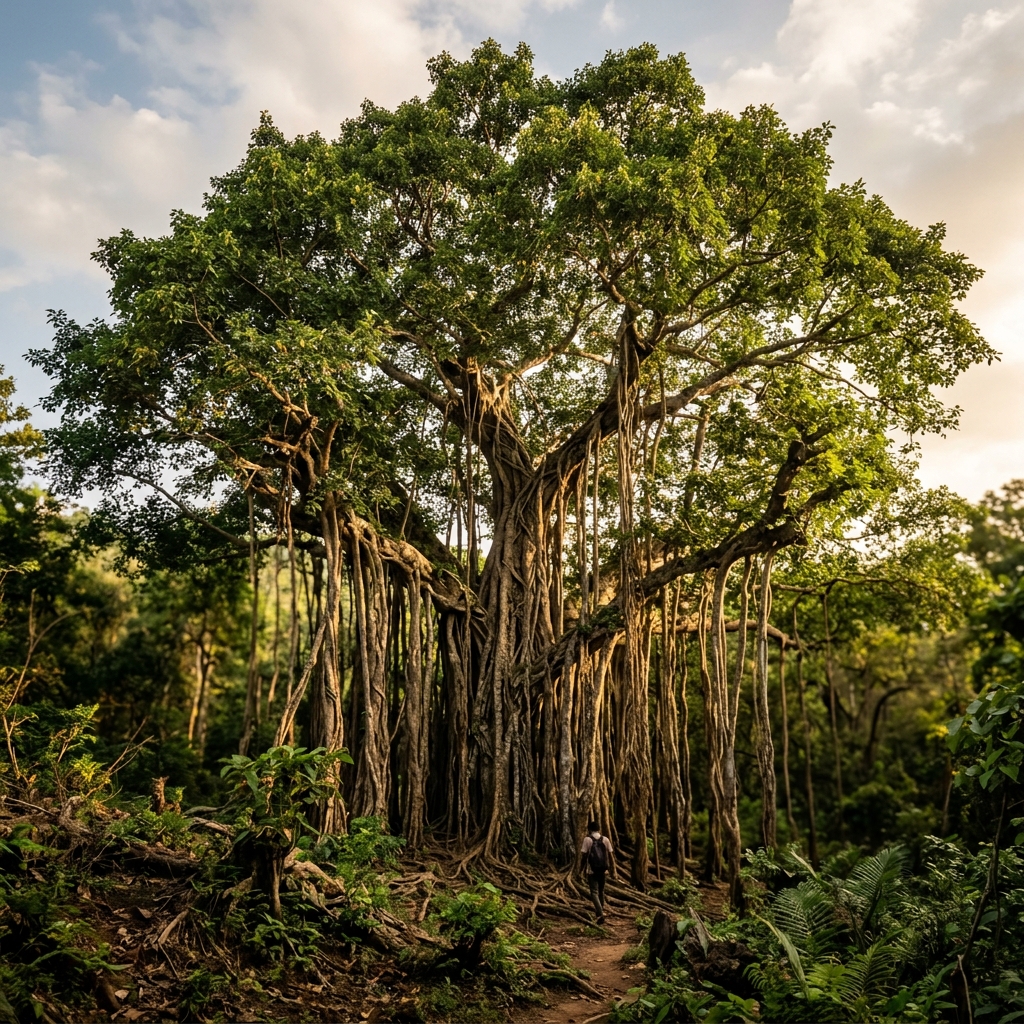
Banyan, (Ficus benghalensis), a species of fig tree belonging to the mulberry family (Moraceae), native to the Indian subcontinent. Revered as the National Tree of India, the Banyan is an immortal symbol of strength, a keystone species for biodiversity, and a durable anchor for local ecosystems.
Physical Description
The Banyan tree is renowned for its massive aerial roots, which grow downwards from its branches and take root in the soil to become supplementary trunks. Over centuries, a single tree can expand to resemble an entire forest. The evergreen leaves are large, leathery, and glossy, providing a dense canopy that casts deep shade. It bears small, red figs that serve as a critical food source for local wildlife.
Environmental Impact
Biodiversity Hub
As a keystone fig species, the Banyan provides a dependable, year-round food source for numerous birds, bats, and mammals. This is especially vital during dry seasons when other trees may not be fruiting. Its expansive structure also provides shelter to countless insect and animal species.
Soil and Water Conservation
The extensive, complex root systems of the Banyan are highly effective at stabilizing soil and preventing erosion. Additionally, the vast network of roots helps raise the groundwater table and prevents excessive water runoff, making it vital for maintaining local hydrology in rural areas.
Carbon Offset Potential
Unlike fast-growing trees favored for rapid carbon yields, the Banyan provides slow, cumulative, and incredibly stable carbon sequestration. Capable of surviving for over 1,000 years, its massive biomass storage makes it a highly durable carbon sink. Its colossal canopy also acts as a giant natural air filter, absorbing pollutants and producing significant amounts of oxygen.
Cultural and Medicinal Uses
The Banyan holds immense cultural and spiritual significance in India, representing longevity, wisdom, and eternal life. It historically serves as the central gathering place for village communities. In traditional medicine, various parts of the tree, including the bark and aerial roots, have been utilized to treat digestive disorders and skin ailments.
Quick Facts
- Scientific Name
- Ficus benghalensis
- Family
- Moraceae (Mulberry family)
- Native Region
- Indian Subcontinent
- Primary Uses
- Shade, cultural/religious, traditional medicine
- Ecological Status
- Keystone Species