
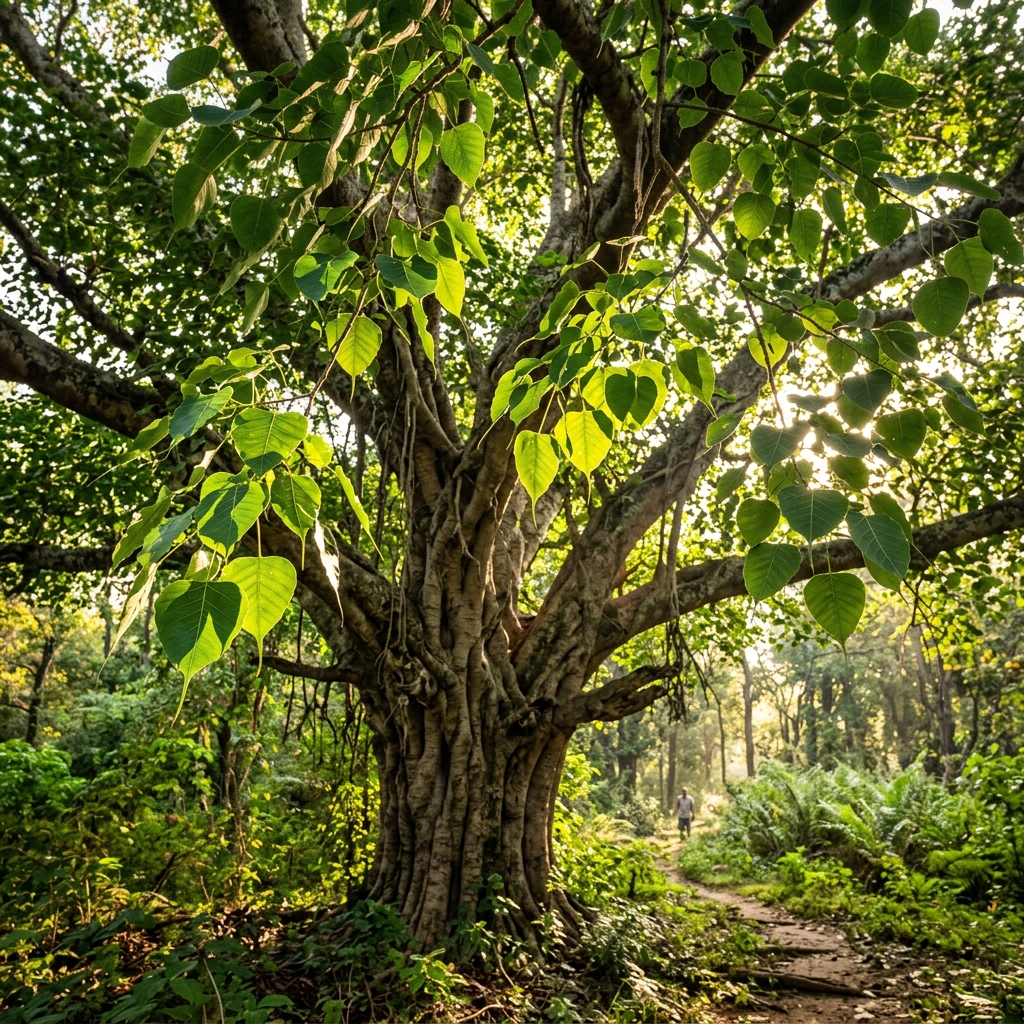
Peepal, (Ficus religiosa), also known as the sacred fig or Bodhi tree, is a species of fig native to the Indian subcontinent and Indochina. Highly revered across numerous cultures, the Peepal tree is scientifically renowned for its incredible air purification abilities and long lifespan.
Physical Description
The Peepal is a large dry season-deciduous or semi-evergreen tree up to 30 meters (98 feet) tall and with a trunk diameter of up to 3 meters (9.8 feet). The leaves are cordate in shape with a distinctive extended drip tip; they hang beautifully and rustle noticeably even in the slightest breeze. Like other figs, it bears small syconia fruit that turn purple when ripe.
Environmental Impact
24/7 Air Purification
Thanks to a specialized photosynthetic pathway known as Crassulacean Acid Metabolism (CAM), Peepal trees are exceptionally rare in their ability to release oxygen even during the night. This continuous air purification makes them invaluable in both natural and urban settings.
Soil Conservation and Urban Cooling
Its extremely deep and extensive root system is highly effective at stabilizing soil, preventing erosion, and improving structure for large-scale land restoration. With a massive, dense canopy, it produces substantial shade and transpiration, effectively combating the "urban heat island" effect in cities.
Carbon Offset & Biodiversity
The Peepal tree is considered a highly effective species for climate change mitigation, sequestering massive volumes of atmospheric carbon dioxide over its long lifetime. As a keystone species, it provides essential food (figs) and a sprawling habitat for a vast array of birds, insects, and small mammals, maintaining local ecosystem health. Because of these traits, it is heavily favored for urban forestry and industrial greenbelt projects.
Significance & Uses
The tree is deeply revered in Hinduism, Buddhism, and Jainism. It is widely considered the Bodhi Tree under which Gautama Buddha is said to have attained enlightenment. Because of its sacred status, it has historically been fiercely protected by communities. In Ayurvedic medicine, virtually every part of the tree is used to treat over 50 conditions, including respiratory issues, skin diseases, and inflammatory disorders.
Quick Facts
- Scientific Name
- Ficus religiosa
- Family
- Moraceae (Mulberry family)
- Native Region
- Indian Subcontinent, Indochina
- Primary Uses
- Cultural/religious, traditional medicine, urban greening
- Special Trait
- Nighttime oxygen emission (CAM photosynthesis)